


Getting Ready for the Start of the Year
Don't forget to add some magic and joy!
The start of a new school year is a mix of feelings. There's all the excitement and anticipation, but also worries and wonders, and that's true for children and for us. For some of them, this is the very first time they've stepped away from home. For others it's a chance to find old friends from pre-school again.
It's easy to think the job is putting up displays and sorting resources. It isn't, not really. What we're actually doing is building a space where every child feels they belong, feels see and ready to have a go! Getting the classroom ready is practical, yes but it's also about preparing ourselves to meet the needs of the unique children who will soon be joining our school community.
Let's explore some of the key areas we consider when preparing our EYFS classroom.

A Safe, Cosy, and welcoming Space
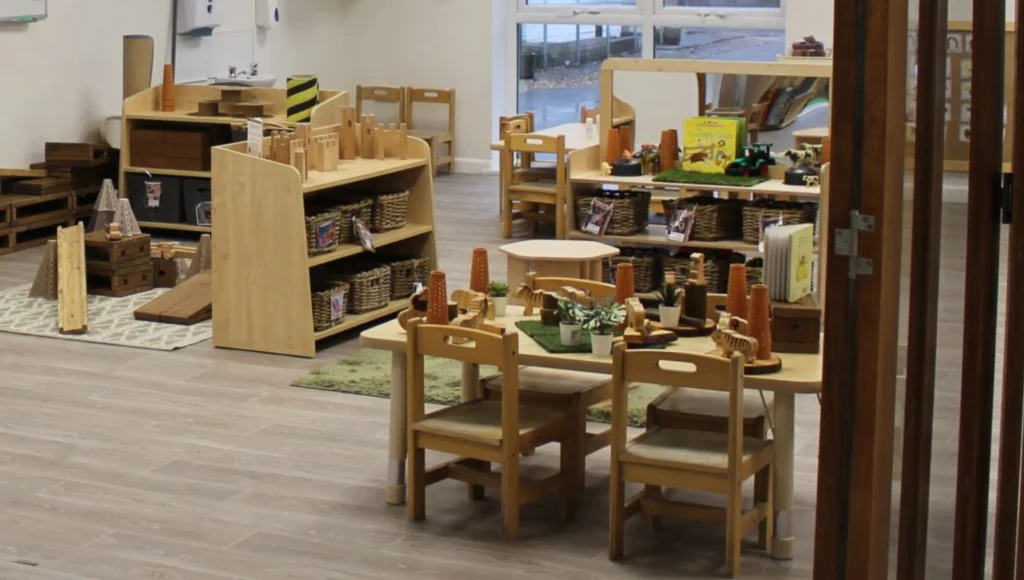
When children and their families step into our classrooms for the firs time, we want them to feel a sense of warmth, safety, and belonging. We hope that we've created a space with cosy atmosphere helps children transition smoothly from home to school life.
Soft furnishings such as rugs, cushions, and drapes instantly make spaces feel homely and inviting.
- Natural materials such as wood and wicker offer comfort and familiarity.
- Defined spaces for quiet reflection, small group play, and to feel enclosed in give children enabling them to focus on their play.
A classroom that feels safe and cosy sets the stage for strong relationships and confident exploration with happy children ready to separate from their families.
Using what the Induction Told us
Our induction process gives us a goldmine of information, and we can use this information when preparing our classroom environment. Transition visits, conversations with families, and observations pf children all help us to see the whole child. What they love, who they are, and what they might find challenging. Ensuring our classroom caters to this supports a smooth transition into school.
- If a child has a particular interest in vehicles, consider placing cars and ramps in your construction area to spark immediate engagement.
- If you know a child struggles with busy spaces, make sure there a calm quieter areas availablefor retreat.
Using what we already know about the children demonstrates respect and value for them as individuals and it also reassures families that we understand their child's uniqueness and that we celebrate it right from the start.

Meeting the Needs of the Children
Every new cohort is different. Some groups may arrive with strong independence skills, while others may need support with routines such as toileting, eating, or managing belongings. Some may be confident communicators, while others are only just beginning to find their voice.
Meeting children's needs requires flexibility and a readiness to adapt. A good starting point is to reflect on the three prime areas of learning: communication and language, personal and emotional development, and physical development. Ask yourself.
- Are there oppurtunities for children to talk, listen, and communicate in every area of the room?
- Does the environment promote independence and choice, with resources at child height and clearly organised?
- Are there chances for both fine and gross motor development indoors and outdoors?
Above all, we want our children to feel safe, lobed, and understood and we recognise that this is the foundation upon which all learning is built. Allowing time for connection and getting to know each child is the most powerful ways to meet their needs at the start of the year.
The Role of Open-Ended Resources
One of the most effective ways to create a flexible and child-centered classroom is by incorporating open-ended resources. These are materials that have no fixed purpose, allowing children to use them creatively in countless ways.
Some of these example in our classroom are:
- Wooden blocks, planks, and crates
- Fabrics, scarves, and ribbons
- Natural treasure such as shells, pinecones, and stones
- Loose parts like reels, tubes, or buttons
Open-ended resources support problem solving, imagination, and collaboration. They grow with the child offering challenge and possibility regardless of developmental stage. For a four year old, a collection of wooden discs might become stepping stones across a river. For another child, the same discs might form a base of a city, or a plate of food in the role play area.
By prioritising open-ended resources, we avoid the trap of overly prescriptive toys that limit creativity. Instead, we provide children with tools for thinking, inventing, and sharing ideas. Exactly the kind of experiences that set them up for lifelong learning whilst ensure that the characteristics of effective Teaching & Learning are at the heart of everything we do.
Co-play and the Joy of Childhood
It can be tempting, in the business of the start of the year, with lots of routines to learn and remembering all of the children's important medical dietary needs, that we forget the most powerful tool we have: ourselves, as co-players!
Spending time playing alongside and with the children communicates so many vital messages:
- I value what you are doing
- I am interested in your ideas
- I am here to have fun with you and share in your joy and discovery
Co-play is not about taking over, but about joining in, extending conversations, and modelling curiosity. Building a tower in the Construction Area, creating secret messages in the Doodle Den, or pretending to cook in the Home Corner is not filling time, or even just for the start of the year. We are showing our children that play that play is important, it’s the work that is valued, and their learning that is joyful.
Childhood is fleeting and is a time that we cannot get back. The start of the year is the perfect time to remind ourselves of the wonder and magic of play. Our role is not only to teach but to share in the joy of exploration, curiosity, wonder and imagination.
A Balanced Approach to Routines
While play is central and the heart of our classroom, routines also matter. Predictable structures give children security and help them make sense of their day. At the start of the year, we introduce routines gently and follow them consistently to help elevate any anxieties our children may have.
We do this by:
- Keeping transitions calm and simple, as short as possible avoiding unnecessary waiting.
- Use visual timetables and prompts to support children who benefit from structure and the wonders and worries of what will be happening in the day
- Balance whole group moments with lots of opportunities for free play and exploration for sustained time
For us, the routines help creates a rhythm to the parts of our day that need to be more structured, like lunchtime and getting our things ready at the end of the day to go home, so our children to feel confident and safe and less worries and anxieties as they have predictability meaning can be immersed in the joy of play and the magic of our cosy and welcoming classroom.
Partnering with Families
Families are children's first educators, and we are welcoming them into our classrooms at the start of the year. We want our families to belong in our classroom too and this helps to set the tone for positive partnerships and build trusting relationships.
We have an open door policy in the mornings that allows for handovers and informal conversations as well as a wall of family photos where our children can hang their coats and bags. All helping to build trust and foster the sense of belonging. Families can see how we have used knowledge of the child such as playing a favourite song as they arrive, having special comfort objects close for those who might need it , or a favourite story on the book shelf, this all together reassures them that their child is in good hands.
Reflecting and Adapting
Finally, we know that our classroom is never a one-off task. We know that the most enabling environments change and adapt in response to observations of children and reflective practice and conversation with the whole EYFS team. In the first few weeks, we observe carefully:
- Which areas are most popular?
- Where do children seem unsure or disengaged?
- What sparks curiosity and collaboration?
We use information to adapt our provision as necessary as a truly child-centred classroom is always evolving, guided by the needs, interests, and voices of our children.
Setting the Tone for a Joyful Year Filled with Magic!

Preparing your classroom for the start of the year is about so much more than neat labels and tidy shelves. It's about creating a safe, cosy, and welcoming space where every child feels a sense of belonging. It's about using the information gathered during induction to tailor provision to meet each child's needs with care and flexibility. It's about embracing open-ended resources that spark creativity and imagination, and above all, it's about remembering the importance of co-play. We want our youngest learners to see adults as genuine play partners who have fun and are playful.
As educators at the start of a child's school career, we have the privilege of shaping the very beginning of a child's learning journey. By approaching the start of the year with thoughtfulness, warmth, and, playfulness, we not only prepare the classroom, we prepare the children, and ourselves, for a year filled with pure joy and magic.
Written by mrsdexterineyfs
Want to read more from a recent project we've worked on? Read more in our Marys little lambs case study