


Let's Get Writing! Fun Fine Motor Activities for Early Writers
With strong fine motor skills underpinning the development of writing, it is important that this area of play and learning is well considered. When children have good fine motor skills, they find it easier to hold a pencil in the correct grip, apply pressure and use it with control. The development of fine motor skills also relates to hand eye coordination as well as building strength in the hand and finger muscles. Getting this right in nursery can really make a difference as children transition into reception, while supporting ongoing skills during the reception year can really make the difference in writing progression.
Loose parts


Small loose parts require children to use their fingers to pick up and manipulate. Loose parts can be added to your water or sand tray, in tuff spots, indoors or outdoors, for maths activities, creative play or in the construction area. Some of our favourites are cotton reels, curtain rings, pegs, washers, bead strings, peg dolls, wooden treasures or natural loose parts. Ensure supervision as small loose parts can pose a choking hazard.
Play dough
This versatile resource offers immense potential for open ended play. You can experiment with colours, scents and textures to inspire interest from the children. We like having loose parts available with play dough as this encourages the play and can also contribute to the development of fine motor skills.
As children are playing, they are continually using the small muscles in their fingers to mould and shape the dough. Different actions such as patting, pulling, poking, kneading and rolling practise the different muscles as children engage in the hand movements. The addition of loose parts means children are using their forefinger and thumb to pick them up to add to the dough or even pick them out. Ideas to include with your playdough: buttons, beads, lollipop sticks, conkers, shells, acorns and cones. As with all small parts, supervision is needed.
Tweezers
These are available in wood or plastic and should be a good size for children to hold and manipulate. You can see our popular wooden tweezers, here. They can be used for many different purposes or in different contexts to develop fine motor skills. As children use the squeezing motion, they are developing the muscles in their hands and fingers as well as hand eye coordination, concentration and dexterity.
We like using tweezers with loose parts such as curtain rings, peg dolls, buttons, sticks and shells. They’re great as an addition to the water tray, in the sand, included in tuff spot activities and in the mud kitchen.
Threading
This type of activity requires children to hold a piece of string, pipe cleaner, shoe lace or wool in one hand and an item for threading in another. It requires focus and hand eye coordination to refine this skill but it is fantastic for developing fine motor skills due to the intricate movements required. Try threading beads, cotton reels, large buttons or leaves with holes punched.
Mark making


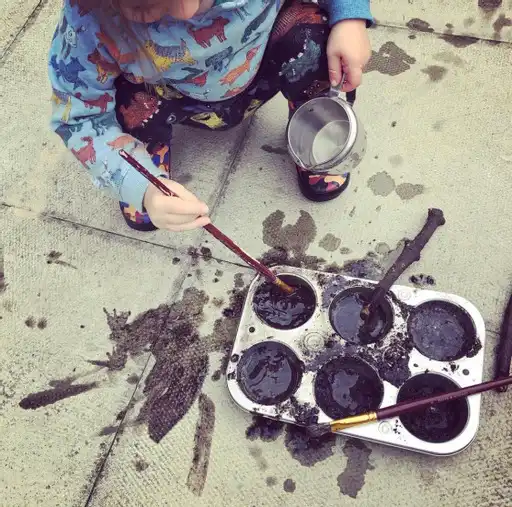
To develop fine motor skills, children should have the opportunity to access mark making activities throughout the provision. These should be varied to appeal to different interests and characteristics of effective learning. Some children will prefer to mark make outdoors on a large scale, whereas others might prefer a smaller scale. Try using chalks, whiteboard pens, chalk pens, bingo dabbers, pastels and charcoal.
We’d love to see how you support the development of fine motor skills in your setting. Share your play with us on social media!