


Welcome 2025: Back to Routine and Building Emotional Resilience
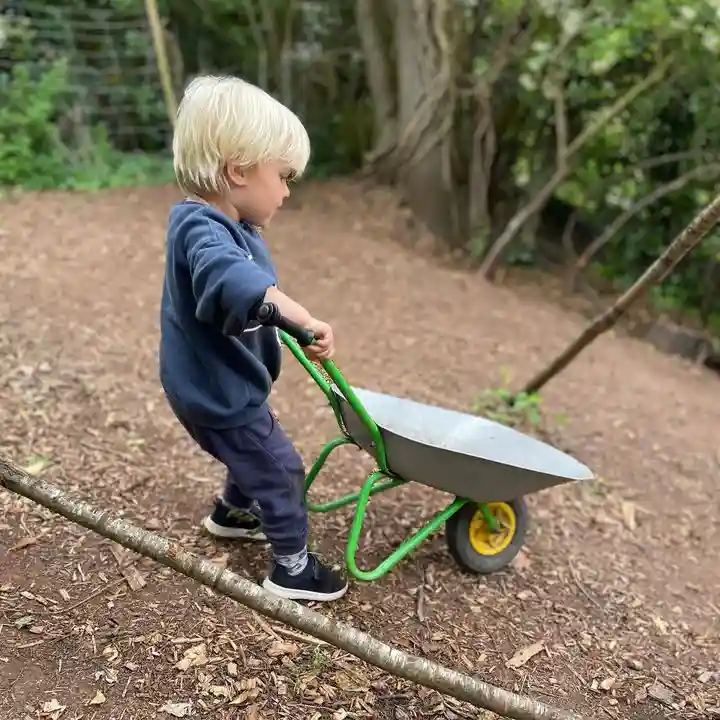
Welcome back to your setting! Now January is here, it's time to get back into those all important routines. Many young children love the Christmas break, as do adults - but many may have found this in between season (and the lack of routine that comes with it) a challenge. This is particularly true for neurodiverse children. With this mind, here are some of our top ways to build back up a sense of calm and emotional resilience - a key aspect of the Early Years Foundation Stage.
Emotional resilience is a key part on the Early Years Foundation Stage, and beyond. If we work to get it right early on, children can develop a positive sense of themselves which will set them up for their future education. However, first, it is important to understand what is meant by emotional resilience so we can adapt our provision and practice in order to nurture this.
Being emotionally resilient refers to the way children (and us as adults!) can handle negative experiences and stress, enabling them to 'bounce back' and work through challenges with a healthy mind set. Encouraging emotional resilience requires us, as educators, to tune in to children's emotions and empower them to work through challenges themselves. Although it is all too easy to step in straight away and take over, we need to allow children time to develop their own problem solving skills, learning that they are capable and resilient.
A safe and secure environment
Firstly, children thrive in an environment which feels safe and secure. Take time to look around your provision and consider whether there are safe, quiet spaces where children can retreat. These areas should be cosy and calming with soft furnishings and comfort items. Think about activity spaces which promote collaborative play as this encourages team work and turn taking. Examples are sand and water play, block play and group artwork.
Opportunities for talk
Opportunities to talk about emotions can be introduced into the environment to encourage children to identify and name their feelings. This builds emotional literacy, giving children the tools to develop their language used to express themselves and to feel emotionally safe. Resources can include anything that depicts feelings, such as emotion mats, cushions, chalkboards, masks, small world people, puppets, mirrors and books.
Role play
Role play areas are important in providing spaces where children can work through scenarios, helping to make sense of the work and how they feel. As children develop narratives and take on roles in the play, it helps them understand others and their feelings as well as requiring the need to respond appropriately to their peers, taking turns and sharing. Home corners are always a popular area of the environment as it provides a reflection of real life where children can reenact experiences. This can be more relatable for children than other types of role play such as travel agents, florists and garden centres.
Enable challenge
Consider how your resources and activities enable children to experience challenge. This is important in children recognising their own abilities, developing a growth mindset and being able to persevere when things are not achieved immediately. Similarly, children need to experience risky play as this can support children to 'have a go' and gain independence. In this way, they are beginning to develop the skills of negotiation and decision making in a safe, supportive environment. They can work through what they're happy with, experience a sense of achievement and reflect on their feelings.
Representation
Finally, consider how your provision represents the children, families and community - can children see themselves represented? When children are able to 'see' themselves in the resources in the setting, they feel valued and it builds self-esteem and identity, important when reflecting on emotional resilience.
How do help build emotional resilience in your setting? Let us know, and don't forget to tag us in your play and provision on our social media channels.