


Becoming Bug Friendly: Welcoming Minibeasts In Your Setting
Our little outdoor critter friends can be an endless source of awe and wonder for children young and old. This fascination can inspire such wonderful conversation and sustained shared thinking which can nurture communication and language development. We can engage in talk about size, shape, colours, the number of legs or spots, differences between the minibeasts we have found and what they might like to eat. This exploration of the natural world around them can encourage curiosity,
However, with more and more areas being taken over by concrete, we need to ensure we do our bit to protect the minibeasts in our settings and schools. Educators can encourage children to show an interest in the outdoor environment by creating a space which is minibeast friendly. This doesn’t have to be expensive as we know settings are on a tight budget. In this, blog, we offer some ideas for becoming bug friendly.

Minibeast hunt:
This is great for encouraging children to recognise and name different minibeasts. You could chat before hand about what you might find and where the minibeasts could be hiding. It’s also a good chance to reinforce the need to be gentle and kind with the minibeasts and always put them back where we found them.
Try taking an iPad or camera with you so children can take a photograph or video of what you find. These images make a great talking points when you return indoors, and act as a way for children to relive the experience and discuss what they found, reinforcing the learning.
To get the most from your minibeast hunt, take along some magnifying glasses and bug viewers. A white sheet is also useful for placing under a bush or tree – as you shake it, the bugs will land on the sheet, making it easier for you to spot and investigate.
Minibeast garden:
Even if your outdoor area does not have flower beds or space to plant in the ground, you can still create a minibeast friendly space. You don’t even need to buy expensive planters – put out a plea to families in case they have any unused pots in their garden. There are also creative ways to grow minibeast friendly plants and flowers, you can even try using old wellies!
Plants that are particularly good for attracting bees include lavender, rosemary, snapdragon, marigolds, cornflower and nasturtium. Butterflies are attracted to buddleia, lavender, primrose, dandelions, aster and fennel.
Bug hotels:


Create a big hotel to entice minibeasts to set up home in your outdoor area. The size of your bug hotel will depend on the space you have available but they can be constructed on a large or small scale. Some of the resources you could use for this include a pallet, straw, tins, bricks, sticks, pipes, guttering, logs, cones and stones. It’s as simple as combining these resources together to make little hidey holes for minibeasts to set up home.
A butterfly feeding station
This is an easy way to encourage butterflies to stop off for a visit in your outdoor area. Simply set up a plate, tray or shallow container with some over ripe fruit – banana works well for us. Leave it in a sunny spot which is sheltered from the wind then wait to see what species of butterfly your feeding station attracts. Don’t forget that butterflies also need water so have some nearby in a small container.
Get creative with loose parts
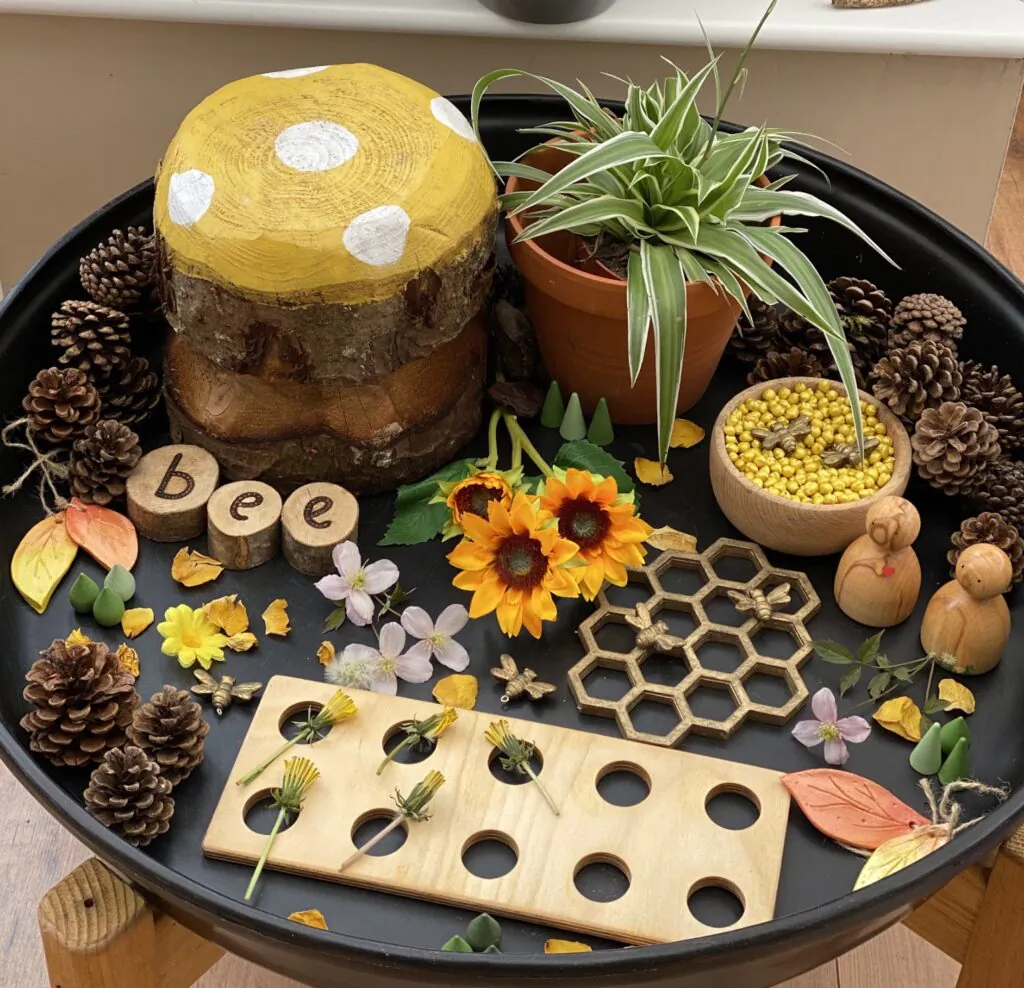


We love loose parts at Cosy! Use a selection of small loose parts to create minibeasts, indoors or outdoors. This activity could be set out on a table top, on the ground, in a tuff spot, indoors or outdoors. Try drawing a template in chalk or use empty pictures frames in which children can combine loose parts to represent a creepy crawly. As they're doing so, there are opportunities to talk about what they're using and why, colours, shapes, textures, sizes and positional language.
Bug themed books
Why not link play to some buggy books? Some of our favourite mini beast themed books are:
• The Very Hungry Caterpillar
• Tad
• Spinderella
• The Big Book of Bugs
• Bumble Bear
• Superworm
• The Bug Collector
• Bug Hotel
• Snail Trail
• The Woolly Bear Caterpillar
The great thing about minibeast focused play is that it can encompass all areas of learning as part of the EYFS. It can be child led, flexible and responsive to the needs and interests of the children. Most of all - have fun!